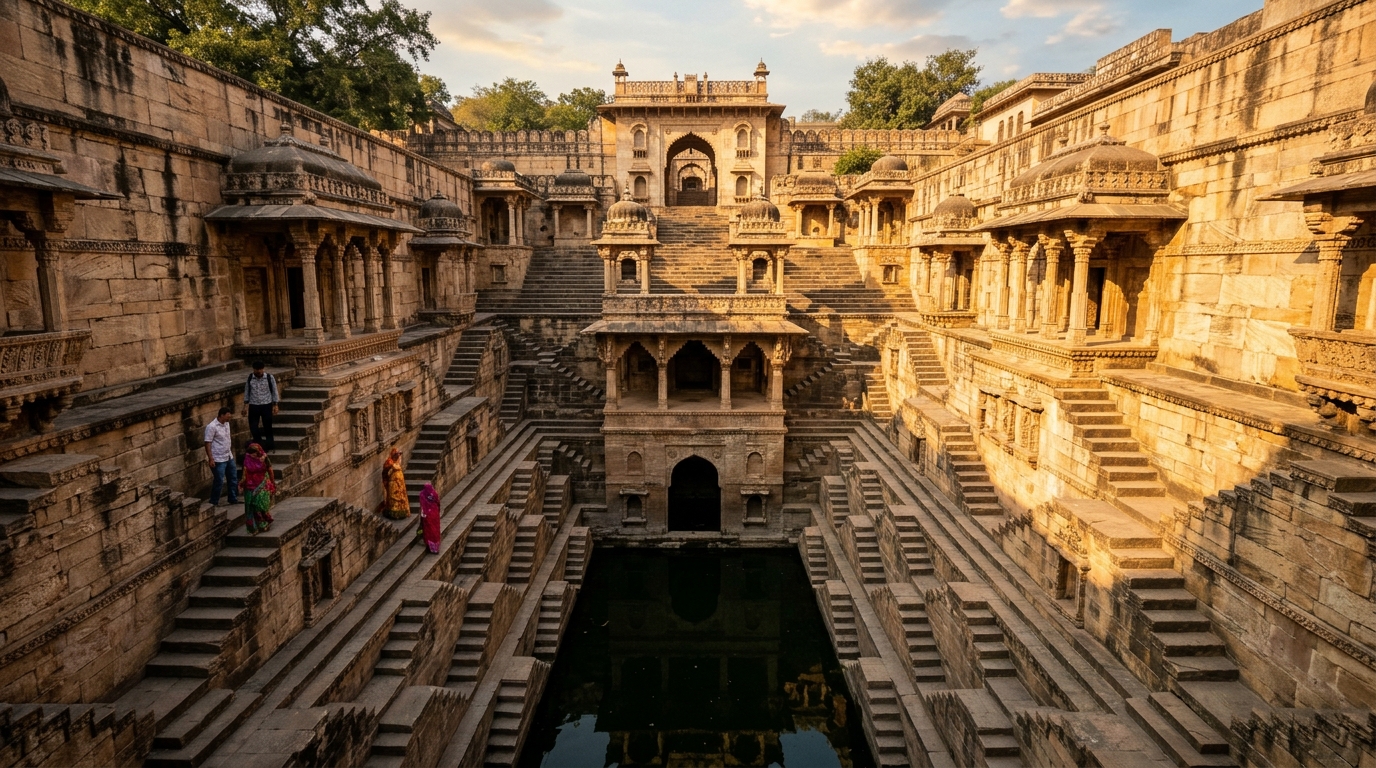
Subterranean Engineering Heritage of the Deccan and Gujarat
Constructed between the 10th and 16th centuries—most notably exemplified by the UNESCO World Heritage site Rani ki Vav in Patan and Adalaj Vav near Ahmedabad—Indian stepwells are architectural masterworks designed to provide perennial groundwater access in arid and semi-arid landscapes.
These multi-tiered subterranean pavilions feature ornate stone pillars, pillared galleries, and intricately carved sculptural friezes that descend five to seven stories below ground level into the water table.
Over centuries, seismic activity, shifting subterranean moisture levels, and climatic weathering have caused micro-fissures and stone surface degradation that are difficult to monitor using conventional two-dimensional architectural drafting.
India Infrastructure Procurement & Heavy Transit Forum 2026
Connect with leading civil engineering contractors, smart city municipal directors, and regional transport authorities.
Learn More →Terrestrial LIDAR and Millimeter-Precision Digital Twins
To establish an authoritative structural baseline, ASI conservation teams are utilizing high-speed panoramic laser scanners that capture over one million spatial coordinate data points per second. The resulting digital point cloud maps subterranean stone surfaces with sub-millimeter precision.
These data points are processed into complete three-dimensional 'digital twins' that allow structural engineers to analyze foundation settlement, evaluate load distributions on ancient corbelled arches, and identify subtle stone delamination before visible surface fractures appear.
Furthermore, high-resolution calibrated photography is texture-mapped onto the 3D models, preserving a permanent, photorealistic archival record of delicate Sanskrit inscriptions, floral motifs, and mythic friezes.
Hydrogeological Preservation and Surrounding Groundwater Recharge
Beyond surface stone conservation, the ASI project encompasses the restoration of natural groundwater recharge catchments surrounding these historic monuments.
In collaboration with state water resource engineers, ancient silt traps and feeder channels connecting surrounding village ponds to the stepwell aquifers are being meticulously desilted and rehabilitated.
This holistic approach not only stabilizes the monuments' structural moisture balance, but also re-energizes surrounding groundwater levels, honoring the original hydraulic purpose of these breathtaking medieval monuments.