The Structural Rigor of First-Class Domestic Competition
Instituted in 1934 and named after the legendary Kumar Shri Ranjitsinhji, the Ranji Trophy demands extraordinary resilience. Played with four-day red-ball matches in the group stages and five-day fixtures in the knockout rounds, the competition tests athletes across vastly diverse climatic and pitch conditions.
From the swinging, cool morning tracks of the North Zone to the abrasive, turning dust-bowls of Chennai and Kanpur, young cricketers are compelled to master specialized technical adjustments. Fast bowlers must learn to generate reverse swing in dry afternoon heat, while top-order batsmen must demonstrate the defensive patience necessary to bat through entire sessions without offering chances.
The Board of Control for Cricket in India (BCCI) has substantially upgraded match fee structures for domestic cricketers, ensuring that first-class athletes who dedicate their careers to state associations earn a dignified, professional livelihood without requiring immediate franchise contracts.
India Infrastructure Procurement & Heavy Transit Forum 2026
Connect with leading civil engineering contractors, smart city municipal directors, and regional transport authorities.
Learn More →State Cricket Association Academies and Sports Science Centers
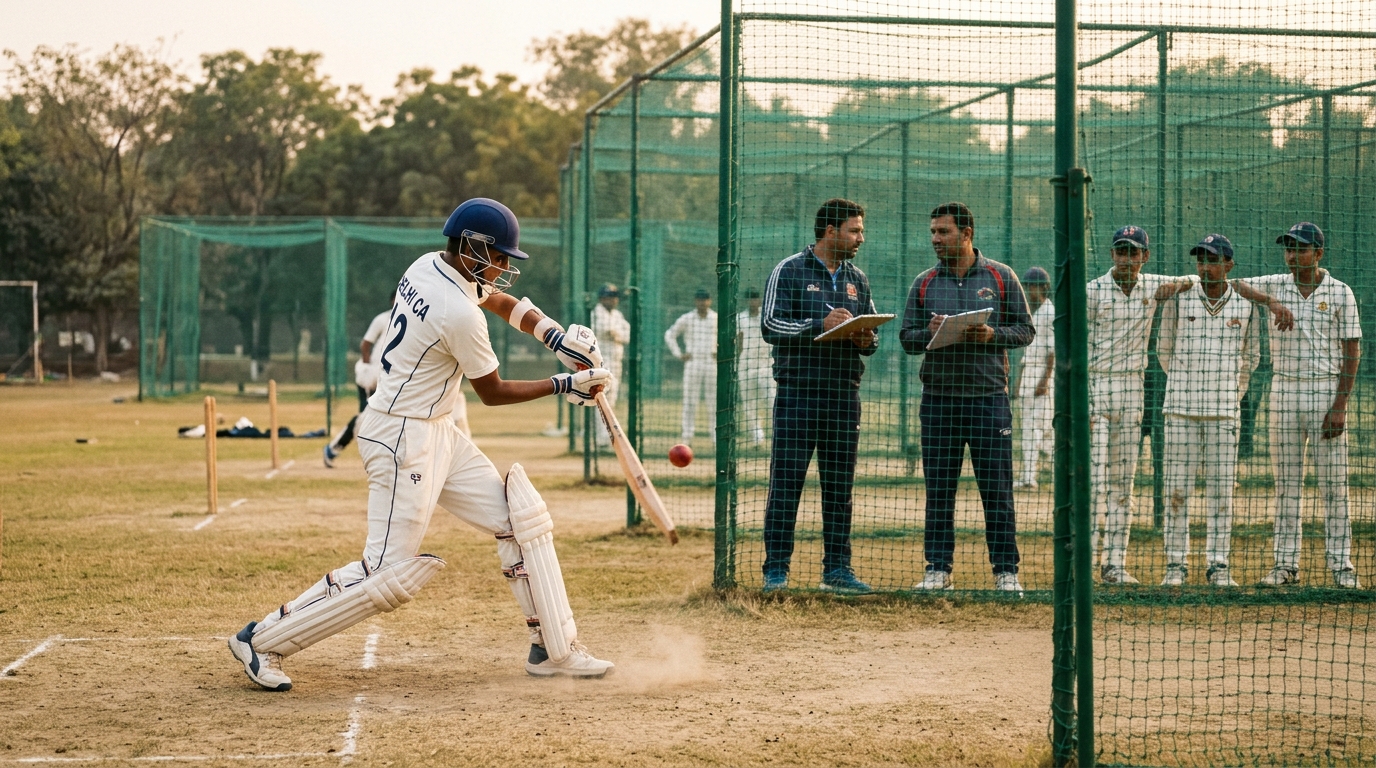
The evolution of state academies—such as the Karnataka State Cricket Association (KSCA) in Bengaluru, the Mumbai Cricket Association (MCA) indoor facility at BKC, and the Tamil Nadu Cricket Association (TNCA) development hubs—has modernized training protocols. Traditional net sessions are now augmented by sports medicine physicians, biomechanics specialists, and dedicated strength and conditioning coaches.
High-speed video cameras capture bowling release angles to analyze micro-strains on lumbar joints, significantly reducing stress fractures among adolescent fast bowlers. Pitch curation has also undergone scientific professionalization, with standardized clay-to-silt ratios monitored by certified BCCI ground staff to ensure balanced competition between bat and ball.
Furthermore, the expansion of age-group tournaments—including the Vijay Merchant Trophy (Under-16) and the Cooch Behar Trophy (Under-19)—ensures that talent scouts identify promising athletes from tier-2 and tier-3 municipal districts long before they reach senior first-class squads.
District Cricket Associations: Broadening Regional Accessibility
Historically, state Ranji squads were heavily populated by players from capital cities and metropolitan club circuits. Over the past decade, however, deliberate decentralized capital investment has transformed district cricket associations.
Full-fledged turf wickets, floodlit training nets, and gymnasiums have been established in districts such as Meerut, Hubballi, Salem, and Jalgaon. Promising youngsters no longer need to migrate to major metropolises during their teenage years to receive structured coaching.
This geographic democratization has enriched the national talent pool, bringing disciplined, hungry athletes who possess formidable work ethics and mental toughness honed on regional district fields. As domestic cricket schedules expand, the Ranji Trophy remains the definitive gold standard of athletic development in India.
“Franchise cricket may offer immediate fame, but the Ranji Trophy builds character. A batsman who can survive forty overs on a turning Day 4 track in Rajkot or a bowler who can deliver thirty overs in scorching heat possesses the mental armor to conquer any challenge in world sport.”
Ranji Trophy Tournament Structure & Seasonal Overview
| Tournament Stage | Number of Teams | Match Duration & Format |
|---|---|---|
| Elite Division Groups | 32 Teams across 4 Groups (8 per group) | 4-Day First-Class Matches; 90 overs/day |
| Plate Division Group | 6 Developmental Teams | 4-Day Matches; round-robin league |
| Knockout Quarter-Finals | Top 2 from each Elite Group (8 Teams) | 5-Day First-Class Fixtures |
| Semi-Finals & Final | 4 Qualified Semi-Finalists / 2 Finalists | 5-Day Matches with reserve day provisions |
| Ball & Match Equipment | Red Kookaburra / SG First-Class Balls | Standard white clothing; certified protective gear |
Pathways to Professional State Cricket Representation
- Registration with affiliated District Cricket Association (DCA) and participation in local district leagues.
- Selection for state age-group trials across Under-14, Under-16 (Vijay Merchant), and Under-19 (Cooch Behar) brackets.
- Consistent performance in the Under-23 Col. C.K. Nayudu Trophy, the primary feeder league for senior squads.
- Mandatory annual medical and fitness clearance at the National Cricket Academy (NCA) sports science facility.