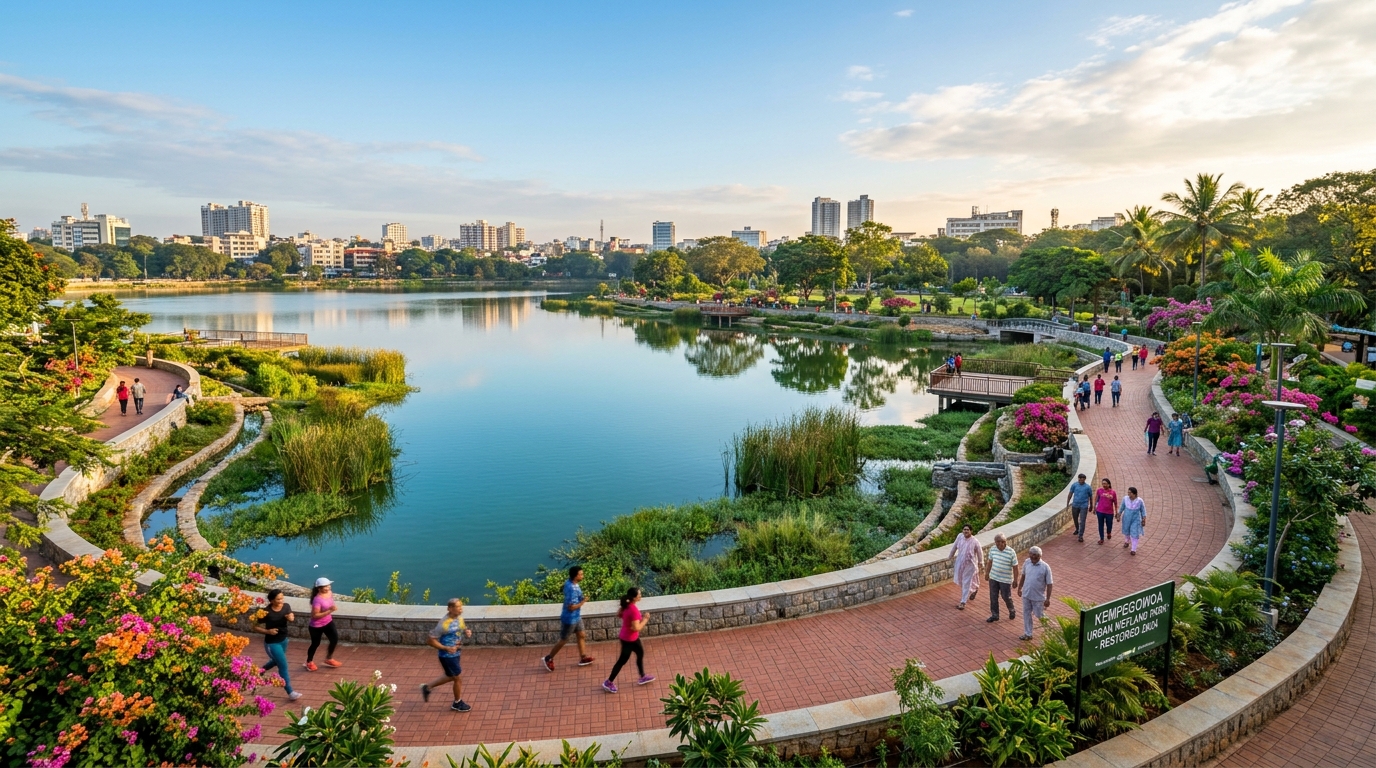
The Cascade Lake System and the Threat of Hydrological Severance
Bengaluru sits atop a high-altitude ridge without a perennial natural river flowing through its core. To sustain settlements, ancient hydraulic engineers constructed interconnected lake series—such as the Koramangala-Challaghatta, Vrishabhavathi, and Hebbal valleys—where overflow from upstream water bodies drained naturally into downstream tanks via natural stormwater channels known as 'Raja Kaluves'.
During rapid municipal urbanization from the late 1990s onward, encroachment upon Raja Kaluves and the direct discharge of untreated domestic sewage compromised water quality. Lakes such as Bellandur and Varthur suffered severe eutrophication, leading to public health hazards and seasonal foam accumulation.
Addressing this crisis demanded more than sporadic dredging; it required systemic restoration of the entire catchment hydrology, combining municipal sewage interception with ecological bio-remediation.
India Infrastructure Procurement & Heavy Transit Forum 2026
Connect with leading civil engineering contractors, smart city municipal directors, and regional transport authorities.
Learn More →Ecological Engineering: Constructed Wetlands and Sedimentation Basins
The scientific blueprint deployed across rejuvenated lakes—including Jakkur, Kaikondrahalli, and Puttenahalli—relies on natural, energy-free biological wastewater polishing. In cooperation with the Bruhat Bengaluru Mahanagara Palike (BBMP) and the Bangalore Water Supply and Sewerage Board (BWSSB), lake perimeters are structured into three functional zones:
Zone One consists of an initial deep sedimentation de-silting basin that captures coarse silt and road runoff. Zone Two comprises a constructed wetland system densely planted with native emergent macrophytes, such as Typha angustifolia (cattails), Phragmites karka, and Canna indica. These plants naturally absorb dissolved nitrates and phosphates, starving blue-green algae blooms.
Zone Three is the open, aerobic deep-water body equipped with solar-powered surface aerators. Dissolved oxygen levels in treated lakes have risen from near-anoxic levels of 1.2 mg/L to healthy thresholds above 6.5 mg/L, fostering the natural recovery of native fish species such as rohu, catla, and freshwater murrel.
Citizen Lake Custodianship and Urban Biodiversity Corridors
What distinguishes Bengaluru's lake turnaround from standard municipal public works is the institutionalization of community custodianship under formal Memorandums of Understanding (MoUs). Neighborhood citizen trusts, composed of resident volunteers, botanists, and retired educators, oversee daily maintenance, conduct weekly water-testing drives, and prevent unauthorized waste dumping.
Perimeter walking tracks lined with indigenous fruiting trees—such as jamun, neem, peepal, and fig—have transformed water bodies into thriving micro-forests. Ornithological surveys conducted by citizen science platforms record the return of over 120 resident and migratory bird species, including spot-billed pelicans, painted storks, purple herons, and common kingfishers.
By demonstrating that urban drainage infrastructure can double as high-biodiversity public parks, Bengaluru's decentralized lake rejuvenation model offers an inspiring, scientifically sound template for water-stressed cities across urban India.
“A lake is not merely an engineering sump for stormwater; it is a living civic commons. When citizens monitor water chemistry and municipal engineers respect natural wetland biology, cities discover the key to hydrological resilience.”
Water Quality Metrics: Pre-Rejuvenation vs. Post-Restoration at Jakkur & Puttenahalli
| Water Quality Parameter | Baseline Degraded Status (2018) | Current Rejuvenated Status (2026) | Standard Benchmark (CPCB Class C) |
|---|---|---|---|
| Dissolved Oxygen (DO) | 1.2 mg/L (Severe anoxia) | 6.8 mg/L (High aeration) | ≥ 4.0 mg/L |
| Biochemical Oxygen Demand (BOD) | 68.0 mg/L (Heavy organic load) | 5.2 mg/L (Safe biological level) | ≤ 3.0 to 5.0 mg/L |
| Chemical Oxygen Demand (COD) | 184.0 mg/L | 22.4 mg/L | ≤ 50.0 mg/L |
| Total Suspended Solids (TSS) | 140.0 mg/L (High turbidity) | 12.0 mg/L (Clear visibility) | ≤ 50.0 mg/L |
| Avian Biodiversity Index | 14 Species recorded | 124 Species recorded | Thriving wetland sanctuary |
Community Guidelines for Lake Preservation
- Never discard household solid waste, plastic wrappers, or religious floral offerings into lake perimeters.
- Ensure that apartment sewage treatment plants (STPs) in lake catchments meet statutory NGT discharge benchmarks.
- Participate in monthly community de-weeding and native sapling plantation drives organized by local lake trusts.
- Report illegal construction or encroachment on Raja Kaluve stormwater channels immediately to the municipal vigilance cell.