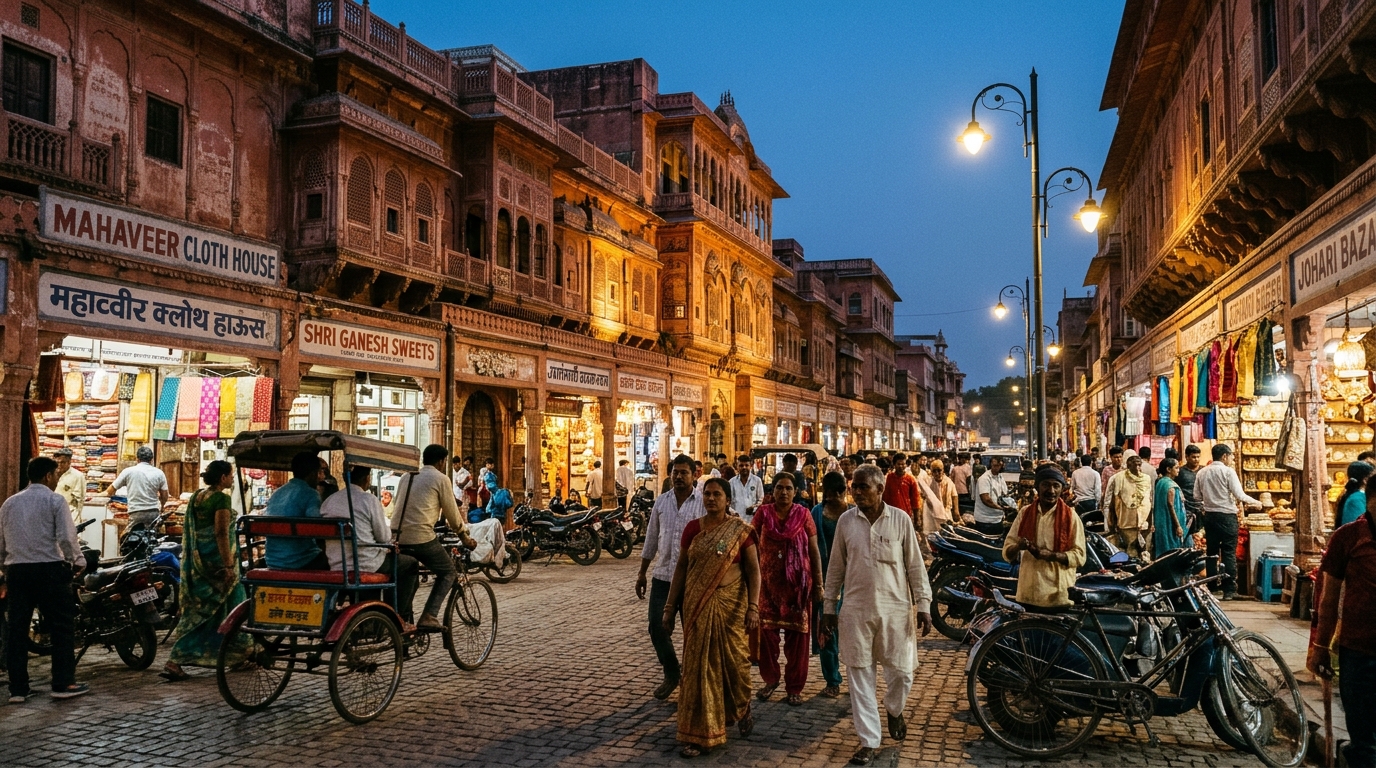
Illuminating the Heritage Aesthetic with Energy Efficiency
As the historic capital of Rajasthan and a premier tourist center, Jaipur requires public street lighting that guarantees pedestrian security while complementing the distinctive architectural character of its terracotta-pink sandstone monuments.
Legacy sodium vapor lighting suffered from frequent bulb burnouts, high power consumption, and excessive light spillage that obscured building facades.
The newly installed solid-state LED luminaires feature custom-engineered optical lenses that direct uniform, glare-free illumination onto roadway and pedestrian surfaces while consuming less than half the electrical power of older fixtures.
India Infrastructure Procurement & Heavy Transit Forum 2026
Connect with leading civil engineering contractors, smart city municipal directors, and regional transport authorities.
Learn More →Centrally Controlled and Automated Dimming Technology
Each LED street lighting cluster is integrated with an automated Centralized Control and Monitoring System (CCMS) equipped with cellular smart SIM modules.
Through real-time telemetry, municipal electrical engineers monitor live energy consumption, voltage fluctuations, and operational status from a centralized command dashboard.
The system automatically dims luminaire intensity by 30% during late-night hours (between 1:00 AM and 4:30 AM) when vehicular traffic is minimal, further optimizing municipal power expenditure without compromising public safety.
Financial Savings and Reduced Municipal Carbon Footprint
Independent energy audits indicate that the LED transition has slashed the municipal corporation's monthly electricity bill by an impressive 52%, yielding annual public treasury savings exceeding ₹14 crore.
Furthermore, automated fault detection algorithms alert zonal maintenance teams to malfunctioning fixtures within thirty minutes, ensuring that repair response times remain well within statutory citizen charter standards.
The successful project demonstrates how heritage urban centers can integrate energy-efficient smart city technologies without compromising architectural romance or historical charm.