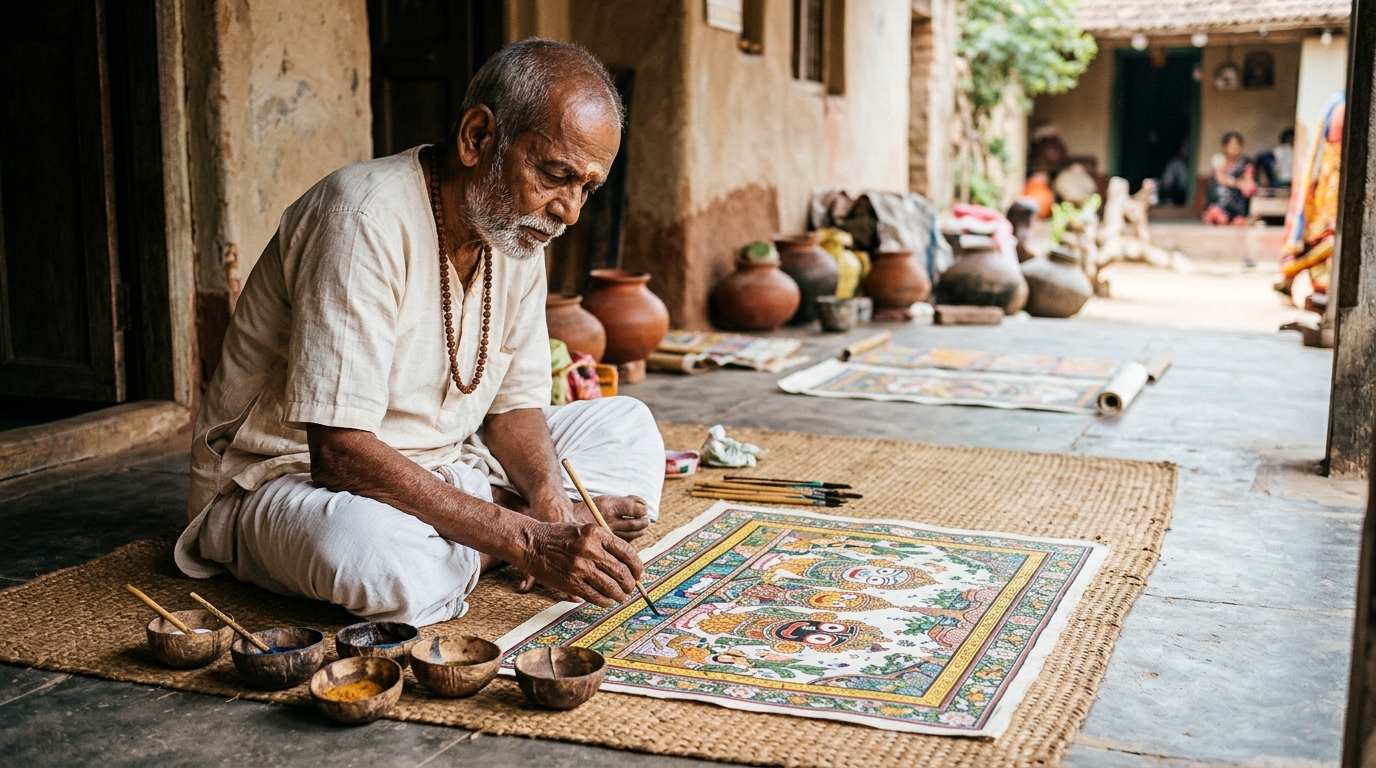
The Millennia-Old Tradition of Cloth and Palm-Leaf Painting
Pattachitra, one of India's oldest and most sophisticated indigenous art forms, has been practiced in Odisha since at least the 5th century BCE, closely intertwined with the religious traditions of the Jagannath Temple in Puri.
Artisans prepare the painting surface ('Patta') through a painstaking organic process: layers of discarded cotton fabric are bonded with tamarind seed paste and coated with powdered soft clay and chalk to produce a smooth, leather-like canvas.
Master artists grind their own mineral and vegetable pigments—lampblack for deep contours, conch-shell powder for brilliant whites, haritala for vibrant yellows, and cinnabar for reds. Using fine brushes crafted from mouse hair, artists hand-paint extraordinarily dense mythological narratives, floral borders, and geometric friezes.
India Infrastructure Procurement & Heavy Transit Forum 2026
Connect with leading civil engineering contractors, smart city municipal directors, and regional transport authorities.
Learn More →Combating Digital Screen-Printed Imitations
The rise of mass-produced, chemically printed paper imitations sold deceptively to domestic and international art collectors had severely eroded pricing stability for authentic artisans who spend months creating a single authentic scroll.
Under the new state verification protocol, registered master artists affix a tamper-evident holographic seal containing a unique encrypted QR code to the reverse of each certified artwork.
When scanned using any standard smartphone camera, the digital certificate displays high-resolution macro imagery of the original painting, the artist's full name, village registry, the date of completion, and an official purity declaration of natural mineral pigments.
Direct Market Access and Global Collector Confidence
The digital registry is linked to an official state artisan marketplace that allows global art enthusiasts, galleries, and museums to verify provenance and commission bespoke scrolls directly from recognized hereditary masters.
Artisan cooperatives in Raghurajpur report that authenticated artworks command 40% higher valuations, ensuring that the younger generation of Chitrakaras finds viable, respected, and prosperous livelihoods within their ancestral village traditions.