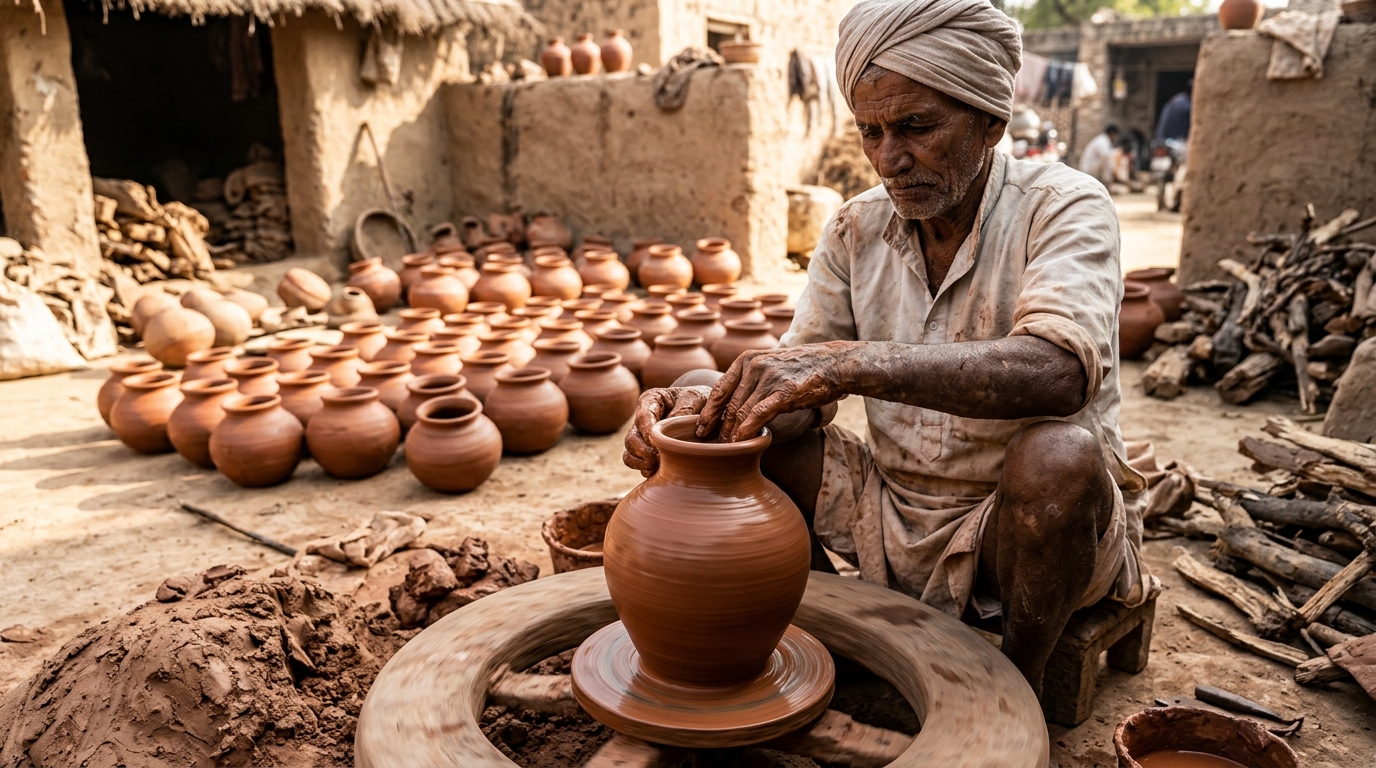
Ancestral Clay Traditions of the Cauvery River Delta
For generations, potter families settled along the banks of the Cauvery and Vennar rivers have practiced a distinctive terracotta craft. Utilizing fine alluvial clay enriched by seasonal river silt, master potters shape monumental guardian deities ('Ayyanar horses'), domestic cookware, and finely perforated acoustic water jars.
The Ayyanar terracotta horses—often standing over eight feet in height—are assembled in modular clay sections, hand-burnished, and fired in traditional wood-and-husk updraft kilns, requiring extraordinary mastery of clay elasticity and thermal cooling cycles.
However, the spread of cheap plastic household goods and changing rural economies threatened the livelihood of younger artisans, prompting the state handicraft development agency to fund a modern community training pavilion.
India Infrastructure Procurement & Heavy Transit Forum 2026
Connect with leading civil engineering contractors, smart city municipal directors, and regional transport authorities.
Learn More →Modern Ergonomic Kilns and Design Innovation
The newly inaugurated center, spanning over two acres in suburban Thanjavur, features solar-assisted mechanized clay pug mills, motorized potter's wheels, and energy-efficient smokeless downdraft kilns developed in consultation with ceramic engineering institutes.
These technological upgrades eliminate the physically exhausting manual clay preparation historically performed by artisan families, while dramatically reducing kiln firing breakage rates from 20% to under 3%.
Senior master artisans conduct intensive apprenticeships for youth from traditional potter communities, teaching ancestral hand-sculpting techniques while introducing contemporary architectural ceramics, terracotta wall cladding, and acoustic interior tiles.
Direct-to-Buyer Craft Displays and Sustainable Tourism
The facility includes a permanent public gallery and retail pavilion where visitors and architects can purchase certified, GI-tagged terracotta art directly from the artisan cooperative without middleman commissions.
With growing demand from sustainable architects and hospitality resorts for natural, eco-friendly terracotta building elements, Thanjavur's pottery guild is experiencing a cultural and economic revival that ensures this ancient Chola-era craft continues to thrive.